


News & Awards.
including honors for “Best Mixed Use,”
“Best Office,” and “Best Historic Rehabilitation”.
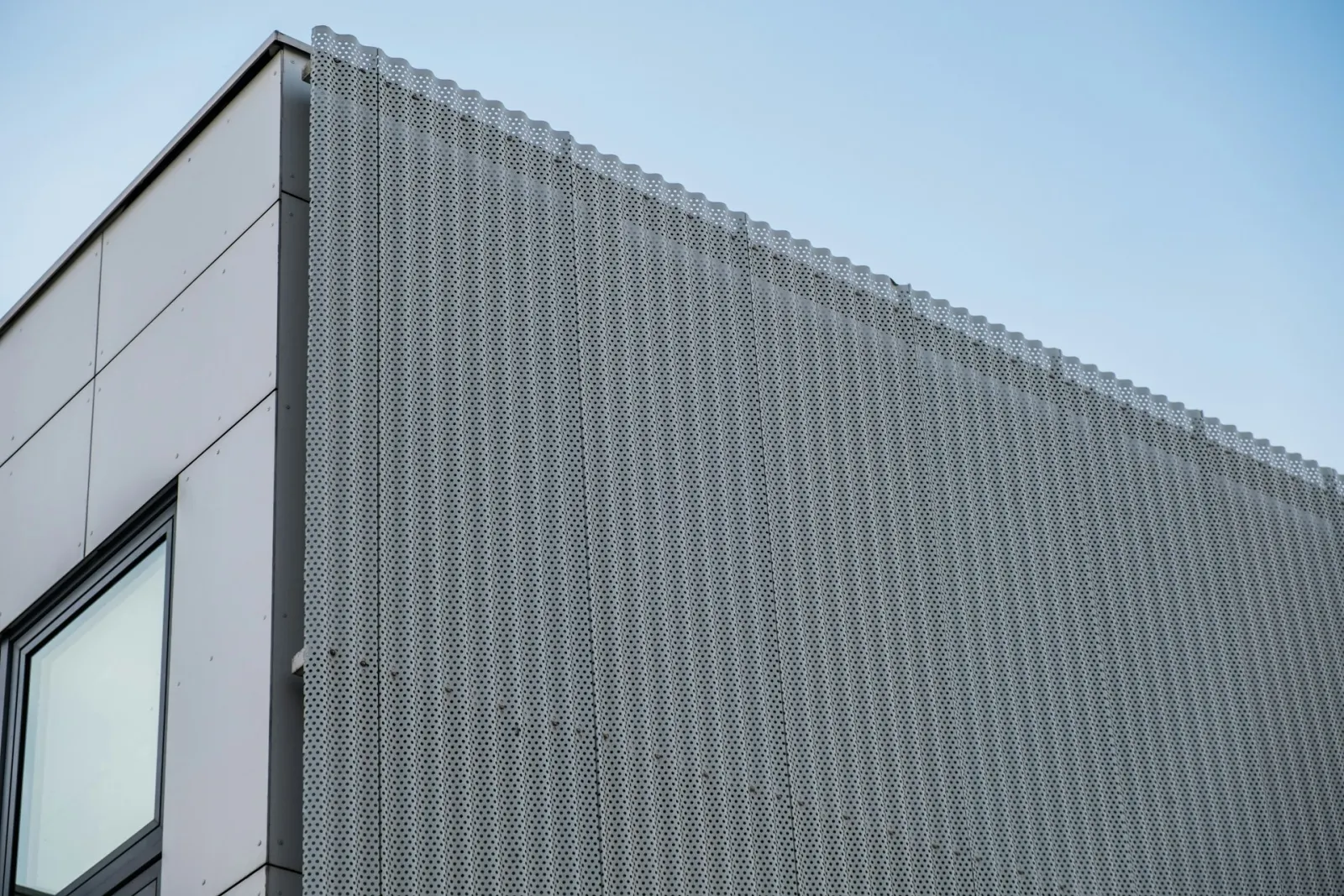
The deal brings one of the world’s most valuable artificial intelligence companies to Richmond’s waterfront — and put to use a building whose exceptional electrical infrastructure has made it the subject of intense industry speculation since it returned to the market in late 2024.
OpenAI has reached an agreement with Brookfield Properties and the City of Richmond to take over the Portside Commerce Center, the 202,371-square-foot industrial facility at 1411 Harbour Way South that has sat vacant since the collapse of battery startup Moxion Power, according to industry sources with knowledge of the deal who requested anonymity because they were not authorized to discuss the transaction publicly. The terms of the agreement were not disclosed.
The deal brings one of the world’s most valuable artificial intelligence companies to Richmond’s waterfront — and put to use a building whose exceptional electrical infrastructure has made it the subject of intense industry speculation since it returned to the market in late 2024. None of the parties — OpenAI, Brookfield Properties, or the City of Richmond — have publicly confirmed the agreement. OpenAI has taken occupancy of the property as of this month, sources confirmed.
The Portside Commerce Center became available after Moxion Power, a mobile battery startup that had signed a major 10-year lease for the space, filed for Chapter 7 bankruptcy in August 2024. Moxion had raised approximately $110 million in venture capital and received public backing from Governor Gavin Newsom, but the company’s rapid expansion outpaced the maturity of its product. Early battery units reportedly suffered from water intrusion and charging malfunctions, and when the company failed to close a critical mid-2024 funding round, it laid off all roughly 250 employees virtually overnight.
Brookfield was offering the space for an undisclosed asking price, describing the site as a unique industrial development with maritime access on the Port of Richmond. The property occupies a 15.75-acre parcel and includes 6,757 square feet of office space alongside the massive warehouse.
What makes the Portside Commerce Center particularly attractive to an AI company is its electrical infrastructure. The building is equipped with 12,000 amps of total electrical service across three 4,000-amp switchboards, delivering approximately 15 megawatts of power capacity, with 12.5 kVA available in the building. A comparable warehouse of roughly 200,000 square feet would typically require only 2,000 to 4,000 amps. That power density — originally specified for Moxion’s battery manufacturing operations — is precisely the kind of infrastructure that data center operators and AI companies prize.
Industry observers note that while 15 megawatts is a compelling power specification for an industrial building, modern AI training clusters often require 50 to over 100 megawatts of capacity. This suggests the Portside facility may be better suited for AI inference workloads, edge computing, or specialized research operations rather than the large-scale foundational model training that OpenAI is pursuing through initiatives such as the Stargate Project, which targets sites with gigawatt-scale power availability.
Public records obtained by The Registry indicate that Brookfield and the City of Richmond have been actively preparing the property for occupancy. A Deferred Improvement Agreement between the City and IV1 1411 Harbour Way S Owner, LLC — the Brookfield special-purpose entity that holds the building — was recorded with the Contra Costa County Recorder’s Office on October 14, 2025. The agreement, signed by Richmond City Manager Kinshasa Curl on October 7, 2025, and by Brookfield Senior Vice President Joonas Partanen on August 26, 2025, allows the developer to defer certain on-site improvements to a later date while posting $1.225 million in faithful performance security and $122,500 in warranty security. The deferred work includes replacing all streetlighting along the property’s frontage corridor to meet Illuminating Engineering Society of North America standards and undergrounding all new and existing electrical lines and connections along the frontage.
The agreement also references the City’s application to the Federal Highway Administration, submitted around January 30, 2025, seeking funding through the Rebuilding American Infrastructure with Sustainability and Equity (RAISE) Program for the Port Infrastructure to Enhance Resiliency (PIER) Project. If the RAISE grant is awarded, the deferred improvements would be modified to include additional undergrounding work along the Harbour Way South right-of-way, with the scope tied to the grant funding amount. The filing of this agreement in late 2025 — months after Moxion’s collapse — signals that Brookfield was moving to bring the property into compliance and ready it for a new occupant, consistent with the timeline of the reported OpenAI deal.
The underlying Design Review Permit, PLN22-058, was originally approved by the City’s Design Review Board on December 14, 2022, for what was then described as a 214,895-square-foot manufacturing warehouse and maritime break bulk facility. The original applicant was CA Ventures, the Chicago-based industrial developer that later became part of the Brookfield platform. The permit conditions reveal the extent of community obligations attached to the site, including TWIC security compliance for maritime vessel operations, a $146,000 fair share payment to the City of Richmond for the Ferry to Bridge to Greenway Complete Streets Plan, installation and maintenance of a shoreline trail connecting the site to the Sheridan Observation Point, and the installation of a Rosie the Riveter sculpture at the building’s entrance. The conditions also note the City’s goal of promoting mixed-use retail and restaurant development on the southwestern portion of the site — a condition that could add a public-facing dimension to any future AI campus.
The reported Richmond agreement adds to what has already been one of the most aggressive real estate campaigns in Bay Area technology history. In February 2026, OpenAI signed a 10-year lease for a roughly 439,000-square-foot campus at 350 and 380 Ellis Street in Mountain View, according to documents filed with the Santa Clara County Recorder’s Office. The five-building Class A property is located in the heart of Silicon Valley and is owned by KREF and capital accounts advised by KKR. In 2024, TMG Partners was selected to reposition the campus into a future-ready workplace designed to meet the needs of leading global technology companies.
In addition, OpenAI already occupies more than 800,000 square feet in San Francisco’s Mission Bay neighborhood and is finalizing the sublease for additional space from Dropbox’s former headquarters at 1800 Owens Street, which could push its citywide footprint past 1 million square feet. A Richmond outpost would mark OpenAI’s first presence in the East Bay and its first foray into an industrial waterfront setting.
The ownership structure underlying the Portside Commerce Center reflects the institutional capital that has flowed into Richmond’s waterfront. Brookfield Properties developed the building as a speculative project under a long-term ground lease from the Port of Richmond, which retains ownership of the underlying land. The lease agreement area encompasses 691,052 square feet, according to the legal description attached to the recorded deferred improvement agreement. Industry estimates for a Bay Area facility of this scale with specialized high-power infrastructure suggest a development value in the range of $60 million to $85 million. For market comparison, a nearby property at 1414 Harbour Way South, a 479,000-square-foot mixed-use site, sold in late 2022 for $103.7 million, or roughly $216 per square foot.
Meanwhile, the adjacent former Moxion production facility in the historic Ford Assembly Building has already found new life. In April 2025, Buffalo-based battery storage company Viridi acquired Moxion’s roughly 40,000-square-foot manufacturing space at auction for approximately $7 million — a fraction of the equipment and improvement value Moxion had invested. Viridi simultaneously secured a $9.3 million grant from the California Energy Commission to expand operations at the facility. The Ford Assembly Building is owned by an entity affiliated with Madison Capital and Meadow Partners. The companies paid $103.7 million in 2022 for the 478,761-square-foot campus. Viridi is now using the Richmond site as its West Coast hub for research, development, and manufacturing of stationary energy storage systems for commercial and industrial buildings. The companies are also working with Blue Rise Ventures to provide operations and leasing assistance. An OpenAI tenancy next door would place two of the defining technology sectors of the decade — artificial intelligence and clean energy storage — side by side on Richmond’s waterfront.
The broader East Bay industrial market provides context for the significance of the reported deal. Newmark’s Q4 2025 report found the industrial market experienced 138,290 square feet of negative absorption in the fourth quarter, with vacancy rates climbing 40 basis points to 8.8 percent. Cushman & Wakefield placed the Q4 2025 vacancy rate at 7.4 percent, up 80 basis points year over year. Kidder Mathews reported that average asking lease rates fell to $1.62 per square foot per month, a decline of 4.1 percent year over year, while the construction pipeline came to a complete halt with no new space under construction in Q4. A 200,000-square-foot commitment by OpenAI would represent one of the largest East Bay industrial leasing transactions in recent quarters and could signal renewed demand from the technology sector for high-power industrial space.
The JLL listing team, which includes brokers Ada Wong and Joonas Partanen, had been marketing the Portside Commerce Center as divisible down to approximately 101,000 square feet with dedicated deep-water port access, 45 total dock and grade doors, and 230 parking spaces. Whether OpenAI intends to use the facility for inference computing, hardware development, or another purpose remains unclear, but the building’s 15-megawatt power capacity — the feature that originally drew Moxion and subsequently fueled months of AI tenant speculation — appears to have ultimately delivered exactly the kind of occupant the market anticipated.